
Four certified devices, ranked on evidence rather than marketing. What separates them, and what the price tags don’t tell you.
You’ve already worked out that this isn’t a thinking problem.
Breathing exercises may help temporarily, while therapy can address the thoughts, behaviours and experiences underlying anxious thoughts. But physical symptoms such as a racing heart can still show up, particularly at night.
You may then have come across research on the vagus nerve and autonomic regulation, and wondered whether these systems could explain some of the physical symptoms of anxious thoughts.
So now you’re looking at four devices… lost.
Here’s what actually separates the four devices.
Why the Vagus Nerve?
Anxious thoughts can have measurable physical effects, and the vagus nerve is one part of the system involved in regulating those responses.
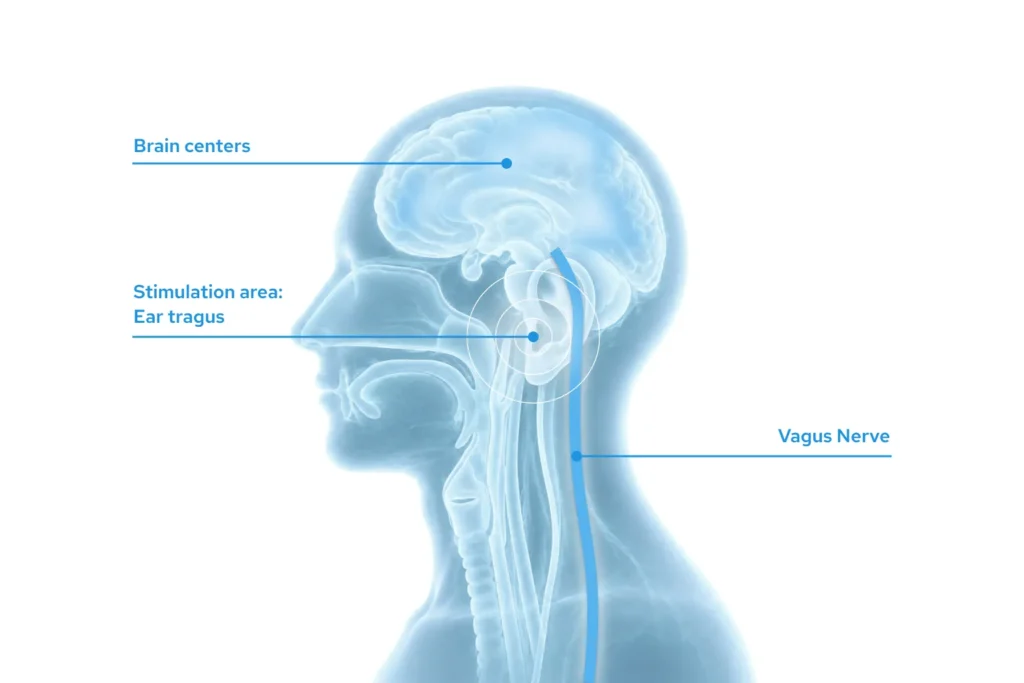
It runs from your brainstem, through your neck, down to your heart and gut.
Vagal activity is involved in autonomic regulation, including the body’s response to stress. However, anxious thoughts cannot be explained simply by having a ‘strong’ or ‘weak’ vagal signal.:
- Heart rate stays up and takes longer to come back down
- Muscles hold tension you only notice when someone mentions it
- Changes in gut function can occur alongside anxious thoughts, although the relationship between the gut, brain and autonomic nervous system is complex
- Sleep loses its restorative stages even when the hours look fine
Here’s the part that matters:
The brain continuously integrates information from the body and the environment when assessing stress and threat.
Signals from the heart, lungs, gut and other parts of the body continuously provide information to the brain. The vagus nerve carries some of these signals, but it is not accurate to describe these four signals as a simple ‘safety report’ travelling up the vagus nerve.
Those four signals travel up the vagus nerve and tell the brain it’s safe.
Lower measures of vagal activity may be associated with altered stress regulation in some people, but low ‘vagal tone’ does not by itself mean that the brain is interpreting the body as being under threat.Your anxious thoughts are partly your brain explaining why your body feels like this.
This is one reason physical symptoms of anxious thoughts may persist even when you understand that your thoughts are not an immediate threat.
What Actually Separates These Four Devices
Three things matter most, and price is only one part of the comparison.
- Evidence base.
The amount and type of published evidence differ substantially between these devices, and evidence for anxious thoughts-related outcomes is limited for several of them.
Some have no published efficacy research at all. That distinction matters if you are considering a device as an adjunct to approaches that have provided only partial relief.
- Placement: Auricular devices stimulate areas of the external ear that receive sensory innervation from the auricular branch of the vagus nerve. Neck devices work near the carotid. Same nerve, different adverse events.
- Consumables: Two of these need a gel or spray to work at all.
The Four Devices: An Honest Ranking
#1: Nurosym
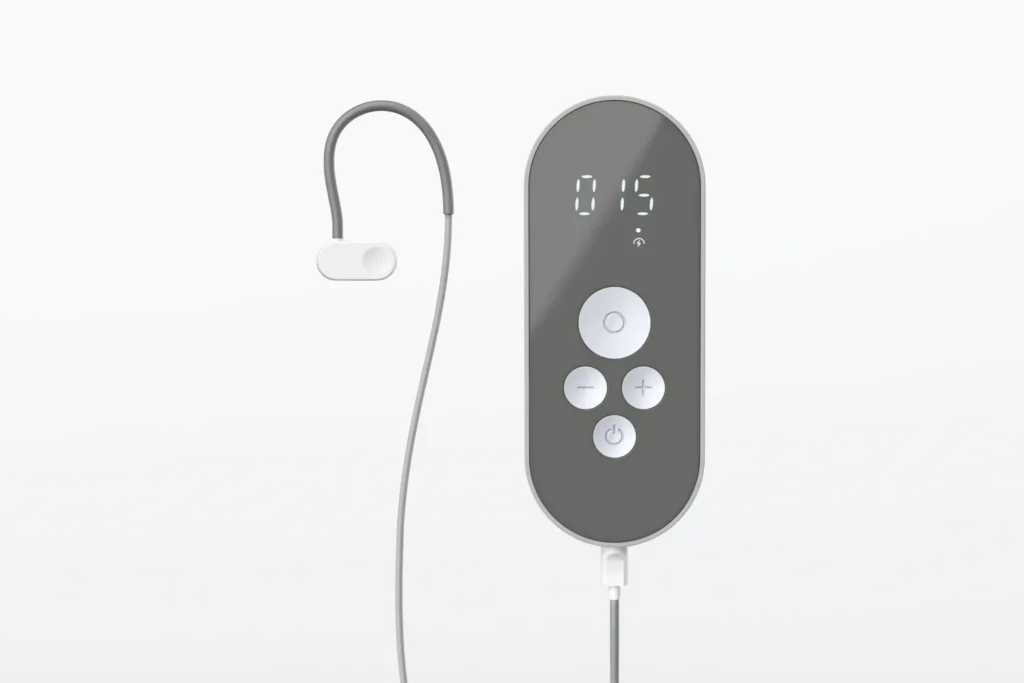
€700 (research subsidy available) · Auricular · AVNT by Parasym
Nurosym has 60+ completed scientific studies supporting its mechanism, Pulsetto and Sensate have none.
- Studies using AVNT technology document reductions in anxious thought severity alongside an 18% improvement in HRV
- Zero serious adverse events reported in studies to date
- CE-marked, verified by independent third-party assessment
- Over 4,000,000 supervised stimulation sessions completed; used by 1,000+ health professionals
- No conductive gel or spray is required, and there are no monthly device fees
- 30-day evaluation period
Best for: anyone whose anxious thoughts have a strong physical component, and who has found that cognitive approaches alone stop short.
#2: Truvaga Plus
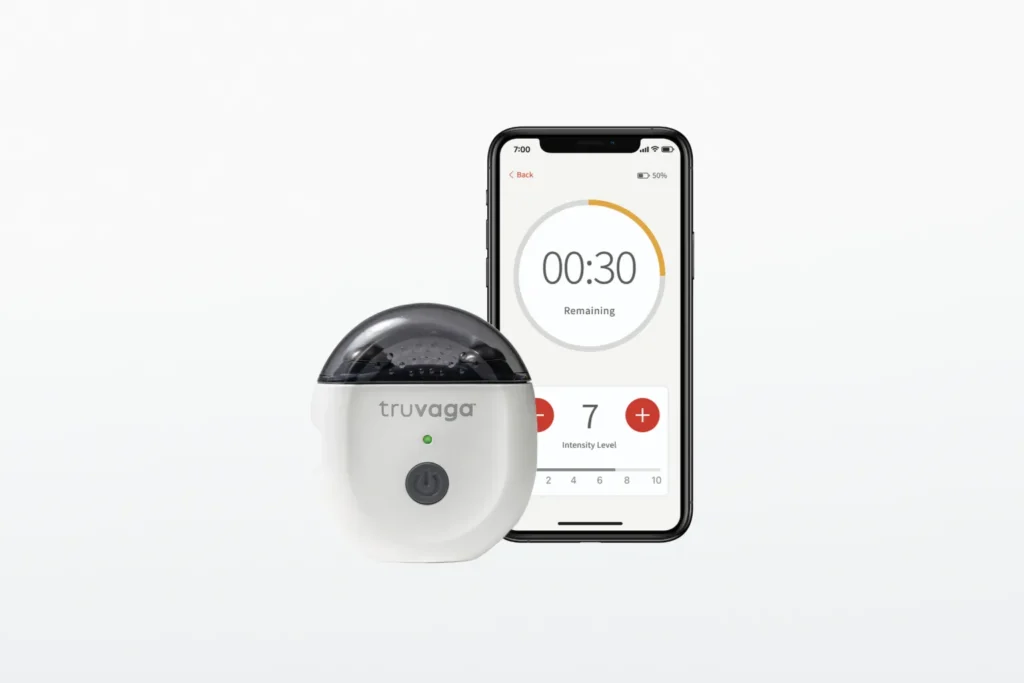
$544+ (device 499,spray~45/year) · Cervical, handheld
Truvaga uses cervical vagus nerve stimulation, a technology related to the approach used by gammaCore. However, gammaCore’s FDA clearance for specific headache indications does not establish Truvaga as an FDA-cleared therapy for anxious thoughts.
Cervical stimulation can produce local muscle contractions or other neck and facial sensations because of the anatomy around the stimulation site.
- Reported adverse effects in a subset of users include muscle spasms, facial droop, lip pull and localised headache
- The FDA clearance is for headache, not for anxious thoughts or autonomic dysregulation
- Not suitable with pacemakers, cardiac symptoms or recent cardiovascular events
- For someone who finds unexpected physical sensations particularly uncomfortable or anxious thoughts-provoking, these effects may be an important consideration
#3: Pulsetto
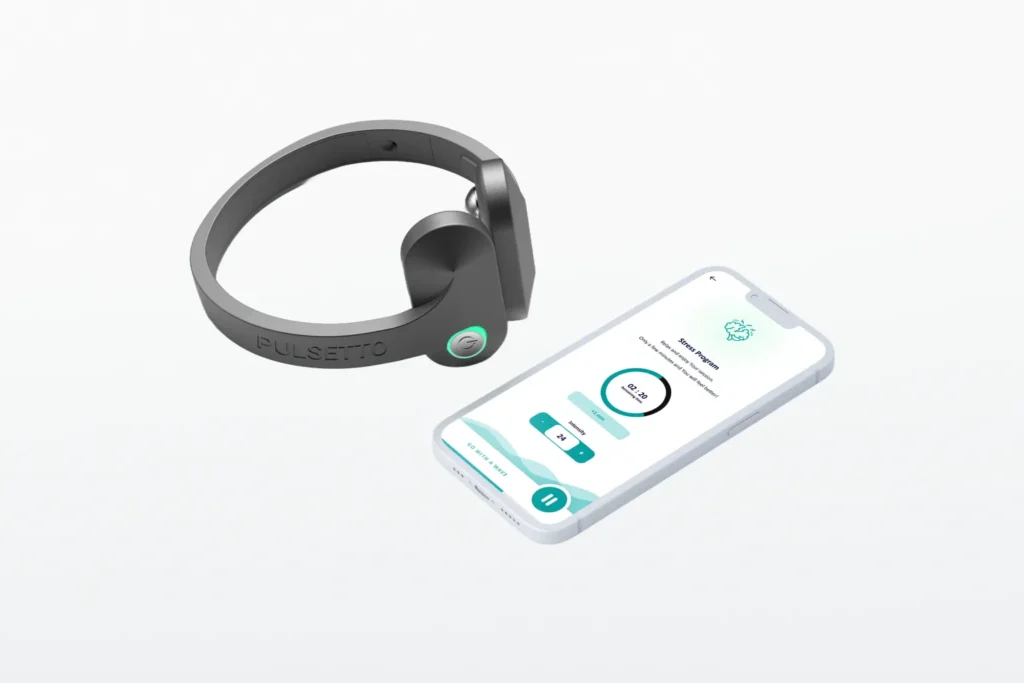
$350–371 (device $269, gel $81–102/year) · Cervical collar
Hands-free design, HSA and FSA eligible, two-year warranty.
Some cervical devices require conductive gel or spray, creating an ongoing consumable cost.
- Published scientific evidence for Pulsetto remains limited, although a 2026 study evaluated its effects on stress biomarkers, anxious thoughts and sleep in healthy adults.
- Fit and electrode placement may affect comfort and stimulation, although the extent to which this varies with neck size has not been established in scientific research.
- Over three years the gel brings the real cost close to the devices it undercuts
#4: Sensate
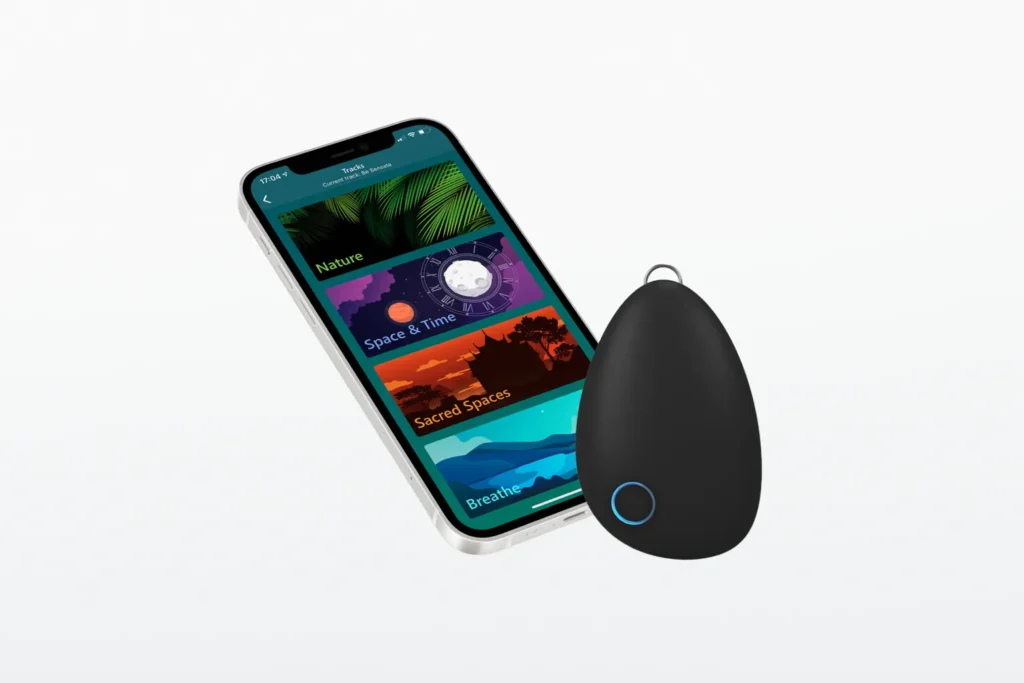
$299–349 · Chest-worn vibrotactile
A pebble-shaped device worn on the sternum, with an app and soundscapes. Pleasant, and genuinely relaxing for some people.
But it isn’t VNS. It uses infrasonic vibration and bone conduction at the chest rather than electrical stimulation of the vagal pathway. It is a vibrotactile relaxation device rather than an electrical vagus nerve stimulation device.
The distinction matters, because persistent anxious thoughts aren’t a relaxation deficit. If your system could downshift on its own, it would have.
Best for: a wind-down tool alongside something else. Best viewed as a relaxation or wind-down tool rather than a vagus nerve stimulation device.
The Verdict
If you’re choosing based specifically on the amount of published research associated with the device and its underlying technology, Nurosym has a comparatively larger research portfolio..
Nurosym is the only one of the four with published research on anxious thoughts, a documented HRV outcome, and no ongoing cost.
Stress responses and patterns of threat sensitivity can change over time, particularly when addressed through appropriate therapy and behavioural approaches.
Expect early changes in sleep onset and resting tension inside two weeks.
Real autonomic recalibration takes 8 to 12 weeks of daily use.
Could Supporting Your Nervous System Help You Manage Anxious Thoughts?
If anxious thoughts are accompanied by persistent physical tension, elevated heart rate, or difficulty switching off, vagus nerve stimulation may be an approach worth exploring alongside established practices.
Learn more about the research behind non-invasive vagus nerve stimulation and how Nurosym is designed to support the vagal pathway.
This blog post aims to be informational and should not replace professional health advice. Always consult with a health professional for personalised advice.
Sources
- Thayer JF, Ahs F, Fredrikson M, Sollers JJ, Wager TD. A meta-analysis of heart rate variability and neuroimaging studies: Implications for heart rate variability as a marker of stress and health. Neuroscience and Biobehavioural Reviews. 2012;36(2):747-756. https://doi.org/10.1016/j.neubiorev.2011.11.009
- Breit S, Kupferberg A, Rogler G, Hasler G. Vagus Nerve as Modulator of the Brain-Gut Axis in Psychiatric and Inflammatory Disorders. Frontiers in Psychiatry. 2018;9:44. https://doi.org/10.3389/fpsyt.2018.00044
- Kaniusas E, Kampusch S, Tittgemeyer M, et al. Current Directions in the Auricular Vagus Nerve Stimulation I: A Physiological Perspective. Frontiers in Neuroscience. 2019;13:854. https://doi.org/10.3389/fnins.2019.00854
- Tracey KJ. The inflammatory reflex. Nature. 2002;420(6917):853-859. https://doi.org/10.1038/nature01321
- Bonaz B, Bazin T, Pellissier S. The Vagus Nerve at the Interface of the Microbiota-Gut-Brain Axis. Frontiers in Neuroscience. 2018;12:49. https://doi.org/10.3389/fnins.2018.00049



 English
  German
  French
  Spanish
  Swedish