
Four certified devices, ranked on evidence rather than marketing. What separates them, and what the price tags don’t tell you.
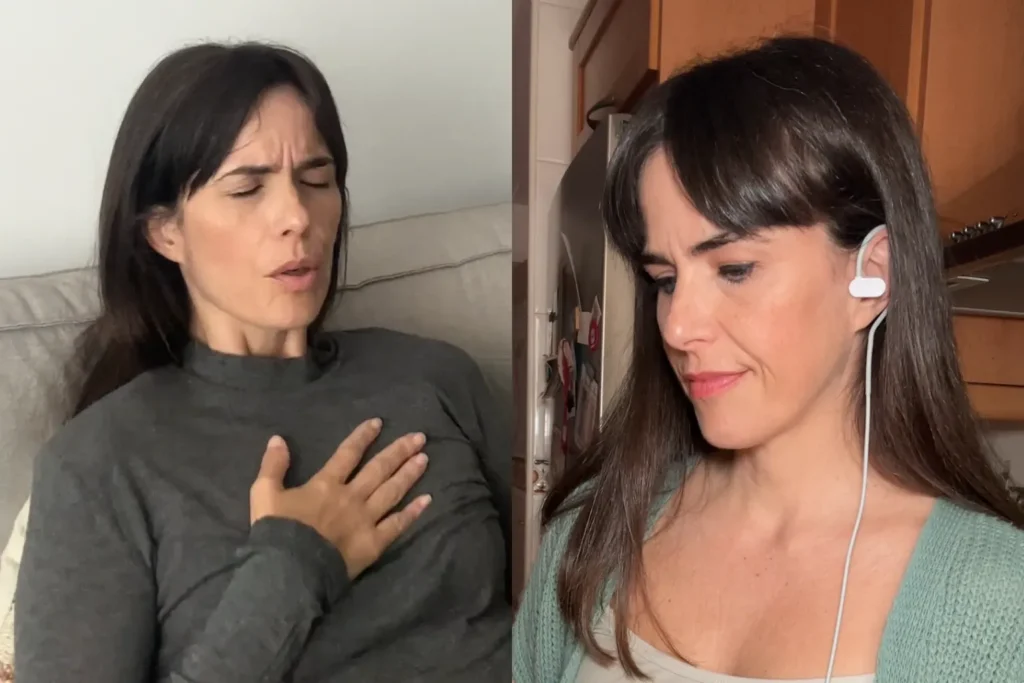
If you have Postural Heart Rate Abnormalities, you already know that your autonomic nervous system plays an important role in your symptoms.
You’ve got the diagnosis, the tilt table result, and years of heart rate graphs: salt, fluids, compression, recumbent cardio, maybe a beta blocker.
You can know exactly what is happening to your heart rate and still feel as though you have very little control over the symptoms.
So now you’re looking at four devices… and trying to work out which, if any, is actually supported by evidence..
Here’s what actually separates them.
Why the Vagus Nerve?
Postural Heart Rate Abnormalities involve abnormal autonomic regulation, and changes in sympathetic and parasympathetic activity can contribute to the way heart rate responds to standing.
When you stand, blood pools in your legs and your baroreflex is supposed to compensate.
In Postural Heart Rate Abnormalities, the normal response to standing can become exaggerated or otherwise dysregulated, resulting in an excessive increase in heart rate in the absence of significant orthostatic hypotension.
Parasympathetic regulation may also be altered, although the underlying autonomic mechanisms differ between people with Postural Heart Rate Abnormalities.
- Heart rate can rise excessively on standing as the body responds abnormally to the change in position.
- Symptoms may persist after prolonged standing or exertion and can take time to settle after activity.
- Some people experience prolonged palpitations, tremulousness or other symptoms of autonomic activation even after sitting or lying down.
- Sleep and gastrointestinal symptoms can also occur in people with Postural Heart Rate Abnormalities, although these symptoms have multiple possible causes.
Here’s the part that matters:
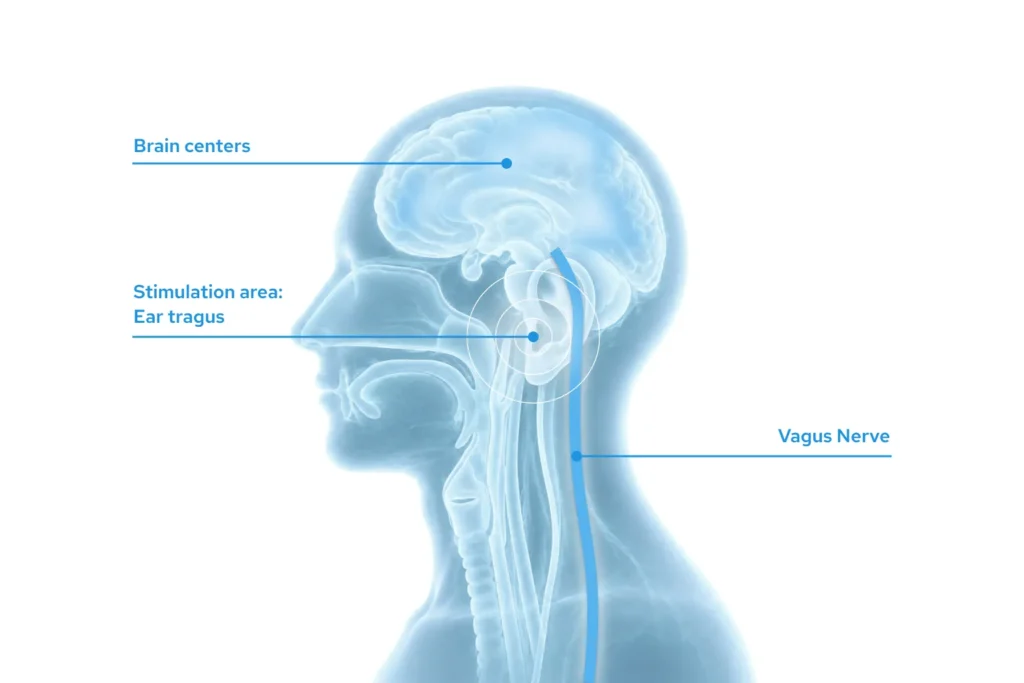
In a small sham-controlled study, daily tragus stimulation reduced the mean postural heart-rate increase from about 32 bpm in the sham group to about 18 bpm in the active group after two months.
That’s from a randomised, sham-controlled study of transcutaneous vagus nerve stimulation in Postural Heart Rate Abnormalities people, over two months of daily use.
Postural Heart Rate Abnormalities is one of the symptoms in which auricular tVNS has been evaluated in a sham-controlled scientific study, although the evidence base is still small and further studies are needed.
What Actually Separates These Four Devices
Three things matter most: evidence, stimulation site and ongoing costs.
- Evidence base.
The amount of Postural Heart Rate Abnormalities-specific evidence differs substantially between these devices.
Some have no published efficacy research at all. When a specific stimulation approach has been studied in Postural Heart Rate Abnormalities, it is reasonable to give greater weight to evidence from that user population when comparing devices.
- Placement. Auricular devices can stimulate areas of the external ear that receive sensory innervation from the auricular branch of the vagus nerve. The tragus was the active stimulation site used in the 2023 sham-controlled Postural Heart Rate Abnormalities study. Cervical devices apply stimulation to the neck in the region of the cervical vagus nerve.
- Consumables. Two of these need a gel or spray to work at all.
The Four Devices: An Honest Ranking
#1: Nurosym
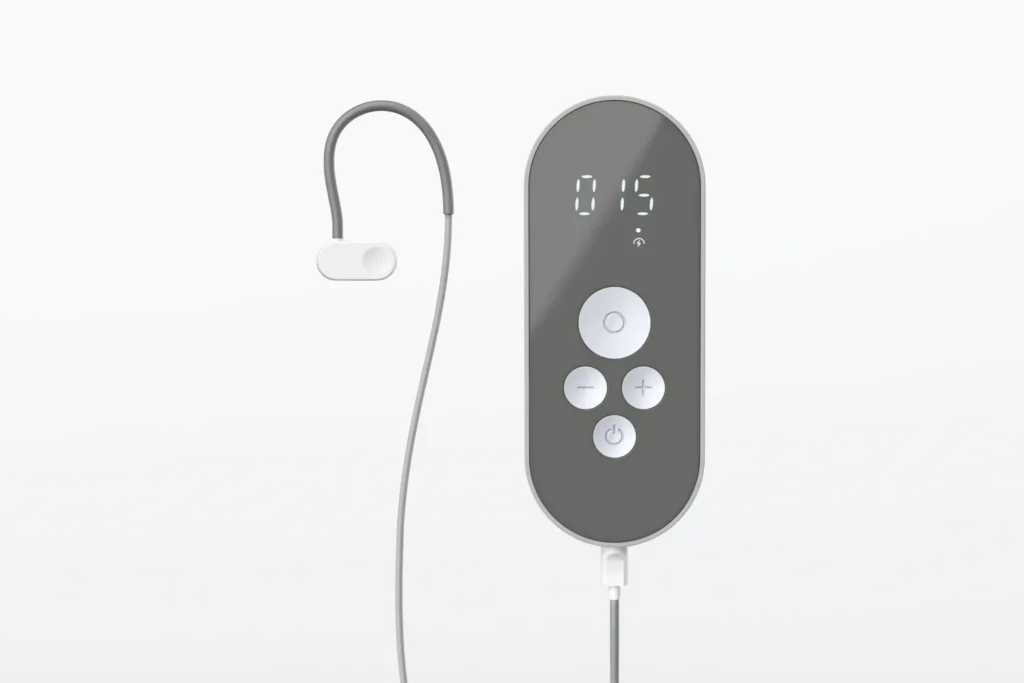
€700 (research subsidy available) · Auricular · AVNT™ by Parasym
Nurosym has 60+ completed scientific studies supporting its mechanism, Pulsetto and Sensate have none.
- Its auricular placement is consistent with the tragus stimulation site used in the published sham-controlled Postural Heart Rate Abnormalities study.
- Nurosym reports a 61% increase in a measure of vagal parasympathetic activity in separate research; this should not be interpreted as a demonstrated 61% improvement in Postural Heart Rate Abnormalities.
- Zero serious adverse events reported in studies to date
- CE-marked, verified by independent third-party assessment
- Over 4,000,000 supervised stimulation sessions completed; used by 1,000+ health professionals
- It can be used while sitting or lying down, which may be practical for people whose symptoms limit their upright time.
- No conductive gel or spray is required for use.
- 30-day evaluation period
Best for: people with Postural Heart Rate Abnormalities who, alongside standard medical care, are interested in an auricular tVNS approach that has been studied in a Postural Heart Rate Abnormalities population.
#2: Truvaga Plus
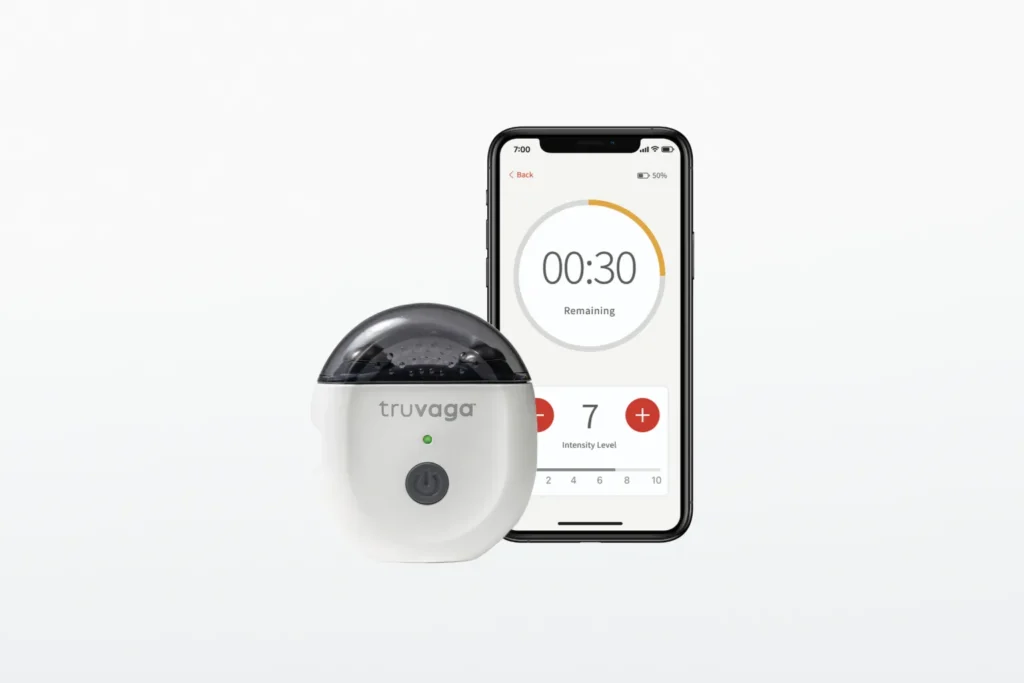
$544+ (device 499,spray~45/year) · Cervical, handheld
Truvaga uses cervical vagus nerve stimulation. The related gammaCore system has FDA clearance for specific headache indications, but that clearance does not establish Truvaga as an FDA-cleared therapy for Postural Heart Rate Abnormalities.
Cervical stimulation can produce local muscle contractions or facial and neck sensations because of the anatomy around the stimulation site.
- Reported adverse effects in a subset of users include muscle spasms, facial droop, lip pull and localised headache
- The FDA clearance is for headache, not for Postural Heart Rate Abnormalities or autonomic dysfunction
- People with implanted cardiac devices, significant cardiac symptoms or recent cardiovascular events should check the device's current safety instructions and speak with their treating clinician before considering cervical VNS
- Because stimulation is applied to the neck, people with cardiovascular conditions should discuss whether it is appropriate with their treating clinician before use
#3: Pulsetto
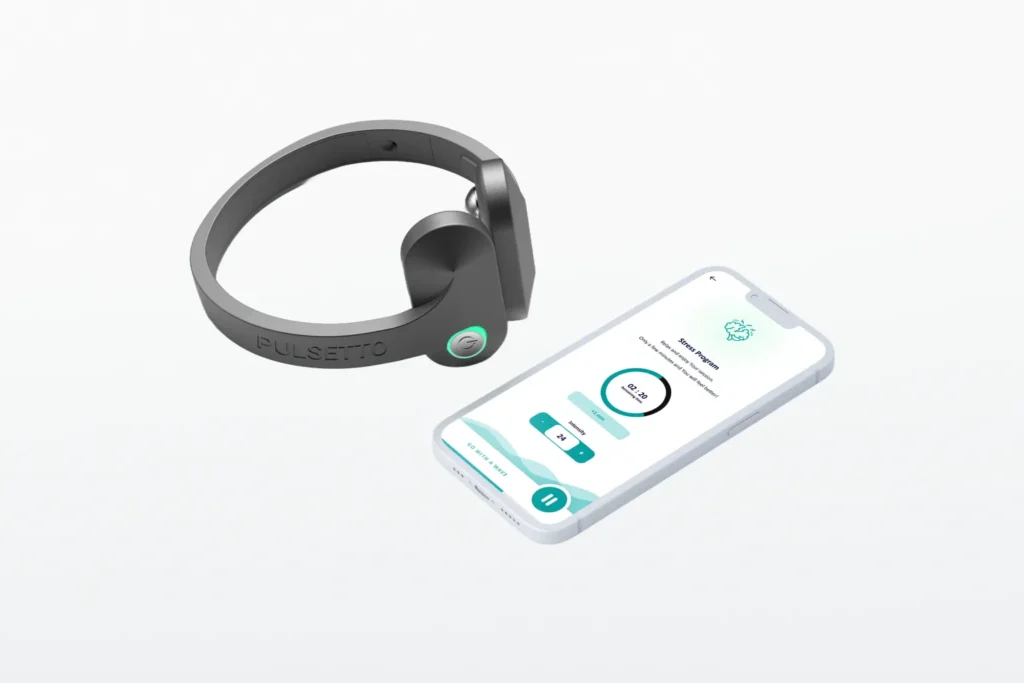
$350–371 (device $269, gel $81–102/year) · Cervical collar
Hands-free design, HSA and FSA eligible, two-year warranty.
Some cervical devices require conductive gel or spray, creating an ongoing consumable cost.
- Published evidence for Pulsetto in Postural Heart Rate Abnormalities remains limited.
- Fit and electrode placement may affect comfort and stimulation, although evidence linking neck size to inconsistent vagal stimulation is limited.
- Comorbid hypermobility is common in this group, and neck-applied pressure is worth raising with your clinician first
- Over three years the gel brings the real cost close to the devices it undercuts
#4: Sensate
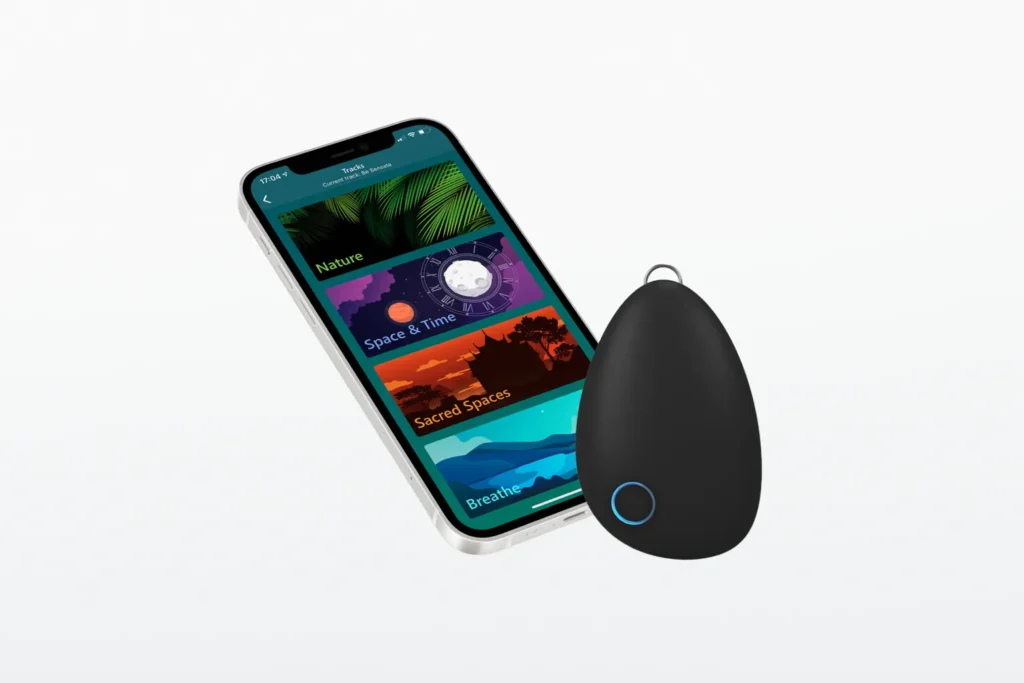
$299–349 · Chest-worn vibrotactile
A pebble-shaped device worn on the sternum, with an app and soundscapes. Pleasant, and genuinely relaxing for some people.
But it isn’t VNS. It uses infrasonic vibration and bone conduction at the chest rather than electrical stimulation of the vagal pathway.
Relaxation may help with stress and symptom coping, but Sensate should not be presented as equivalent to electrical vagus nerve stimulation or as a therapy specifically targeting the orthostatic heart-rate response in Postural Heart Rate Abnormalities.
Best for: people looking for a relaxation or wind-down tool rather than electrical vagus nerve stimulation.
The Verdict
If your priority is Postural Heart Rate Abnormalities-specific scientific evidence, the auricular tVNS approach has the strongest direct evidence among the approaches discussed here.
Nurosym is the only one of the four using the stimulation site that was actually tested in Postural Heart Rate Abnormalities sufferers, with published vagal tone outcomes and no ongoing cost.
Talk to your cardiologist or autonomic specialist first, particularly if you have any structural cardiac finding or an implanted device.
The goal should not be to promise a cure, but potentially to improve symptoms or tolerance of upright activity as part of a broader Postural Heart Rate Abnormalities management plan.
Use the device according to its current manufacturer instructions and your clinician’s advice rather than assuming that a particular intensity or titration schedule is appropriate for everyone with Postural Heart Rate Abnormalities.
Some people may notice changes in how stimulation feels or in individual symptoms, but the available Postural Heart Rate Abnormalities evidence does not establish how quickly a meaningful scientific benefit should appear.
This blog post aims to be informational and should not replace professional health advice. Always consult with a health professional for personalised advice.
Sources
- Stavrakis S, Chakraborty P, Farhat K, et al. Noninvasive Vagus Nerve Stimulation in Postural Tachycardia Syndrome: A Randomized Clinical Trial. JACC: Clinical Electrophysiology. 2023 Nov;9(11):2374-2384. https://pubmed.ncbi.nlm.nih.gov/37999672/
- Wang Z, Zhu T, Li X, Lai X, Chen M. Tragus Nerve Stimulation Attenuates Postural Orthostatic Tachycardia Syndrome in Post COVID-19 Infection. Clinical Cardiology. 2025 Feb 27;48(3). https://pubmed.ncbi.nlm.nih.gov/40014480/
- Sheldon RS, Grubb BP, Olshansky B, et al. 2015 Heart Rhythm Society expert consensus statement on the diagnosis and treatment of postural tachycardia syndrome, inappropriate sinus tachycardia, and vasovagal syncope. Heart Rhythm. 2015;12(6):e41-63. https://pubmed.ncbi.nlm.nih.gov/25980576/
- Fedorowski A. Postural orthostatic tachycardia syndrome: clinical presentation, aetiology and management. Journal of Internal Medicine. 2019;285(4):352-366. https://pubmed.ncbi.nlm.nih.gov/30372565/
- Kaniusas E, Kampusch S, Tittgemeyer M, et al. Current Directions in the Auricular Vagus Nerve Stimulation I: A Physiological Perspective. Frontiers in Neuroscience. 2019;13:854. https://pubmed.ncbi.nlm.nih.gov/31447643/
- Borges U, Laborde S, Raab M. Influence of transcutaneous vagus nerve stimulation on cardiac vagal activity: Not different from sham stimulation and no effect of stimulation intensity. PLOS ONE. 2019;14(10):e0223848. https://pubmed.ncbi.nlm.nih.gov/31603939/
- Task Force of the European Society of Cardiology and the North American Society of Pacing and Electrophysiology. Heart rate variability: standards of measurement, physiological interpretation and clinical use. Circulation. 1996;93(5):1043-1065. https://pubmed.ncbi.nlm.nih.gov/8598068/


 English
  German
  French
  Spanish
  Swedish