

I’m a 45-year-old marketing manager, and for the past few years, I’ve gradually stopped feeling like myself.
Nothing dramatic, no diagnosis, and no crisis a health professional could point at, just a gradual decline in how I felt day to day. A handful of things that each felt minor on their own, but together had turned me into a more tired, more wired, tensed, and mentally drained version of myself.
I’d been hearing about vagus nerve stimulation for a couple of years, on podcasts, on Twitter, and from colleagues.
The claims surrounding it were extremely broad, which initially made me sceptical. But many of the reported benefits overlapped with the issues I was experiencing.
I didn’t have one big problem.
I had multiple moderate but persistent issues, and they all seemed connected.
So I decided to stop reading about it and test it properly. For 30 days, I kept a journal, and I tracked the six things people most often say vagus nerve stimulation helps with:
- HRV: My Oura ring kept me in the same low range for 2 years, and I wanted to see if anything could move it.
- Sleep: I got my hours, but I woke up feeling like I hadn't, and I wanted to know if the quality could change.
- Anxious thoughts: Not panic attacks, just a constant low-level persistent physiological tension, the feeling of bracing for an email that never comes.
- Gut: I had bloating and persistent digestive unpredictability.
- Inflammation: I had that persistent low-grade puffiness, stiffness, and body aches I'd started to think was just part of being in my forties.
- Tiredness: I had the kind of tiredness that did not improve significantly with rest.
The 30-day money-back guarantee was what made me actually click buy. If nothing happened across any of those six, I’d send it back.
Here’s what actually happened.
Day 1–4: The First Few Days
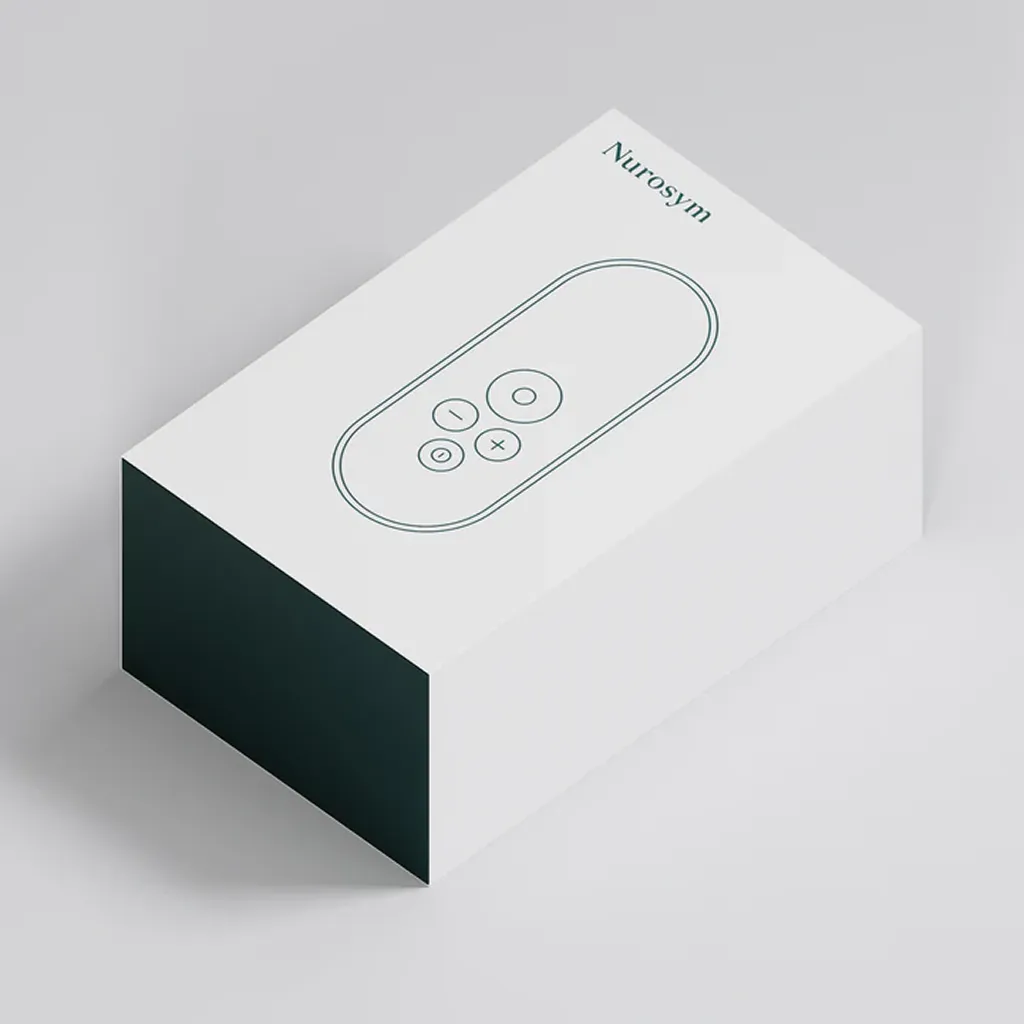
It came in a plain white box, smaller than I’d expected.
I clipped it onto my left ear while the coffee was brewing, set the intensity to a level I could just barely feel, and got on with my morning. It was a faint tingle, nothing more.
For three days, all six of my things stayed exactly where they were: unchanged HRV readings, same groggy mornings, same persistent background tension, same bloating, same low-grade stiffness and puffiness, same tiredness by mid-afternoon.
I was already questioning whether I would continue using it.
On day four, I read the manual properly and realised I’d been doing short sessions. The recommended duration was at least thirty minutes, and I’d been doing ten. So I wore it for a full hour while answering emails that morning.
Around the forty-minute mark, I noticed a subtle change.
The muscle tension in my shoulders had eased, my jaw wasn’t clenched, and the persistent background tension I had normalised over time was gone.
I didn’t suddenly feel amazing, I just felt like I’d been maintaining a level of tension I had stopped consciously noticing, and I’d finally put it down.
That was the first noticeable change, and it was enough to make me keep going.
Day 8–12: Changes in Stress Reactivity, and the Number Starting to Move
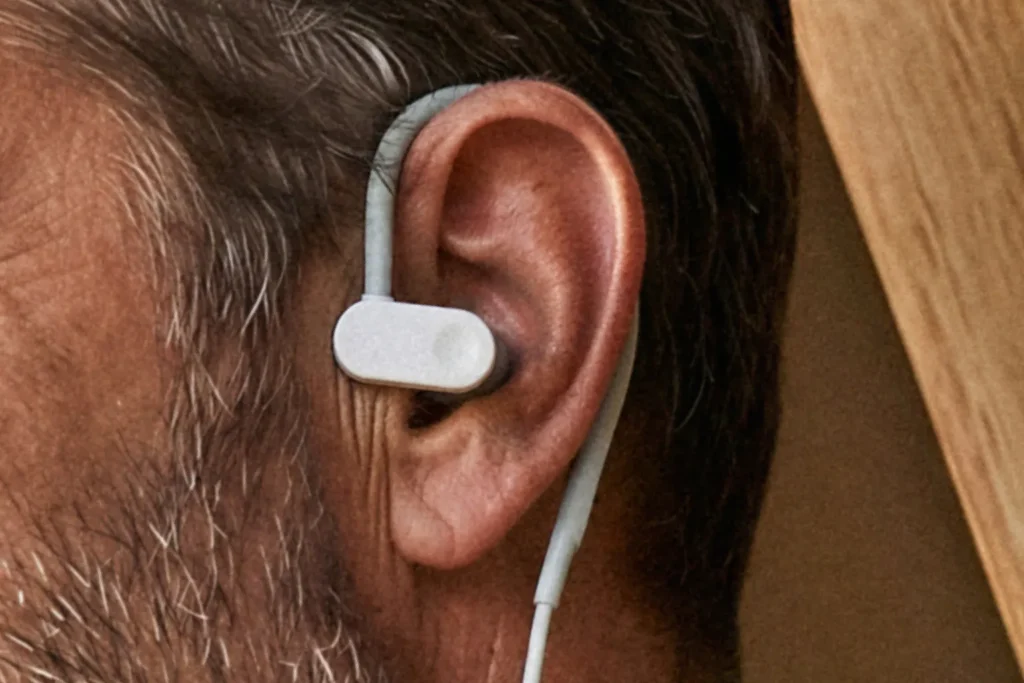
By the second week, I was doing two sessions a day, thirty minutes in the morning while I caught up on emails and forty-five minutes in the evening while watching TV.
The background anxious tension kept easing.
I was still in the same job, still in the same meetings, still answering the same volume of messages, but I wasn’t ending the day mentally depleted. When a difficult call ended, I wasn’t carrying it into the next thing for an hour. The recovery between stressful moments had gotten quicker.
Then the HRV one started moving.
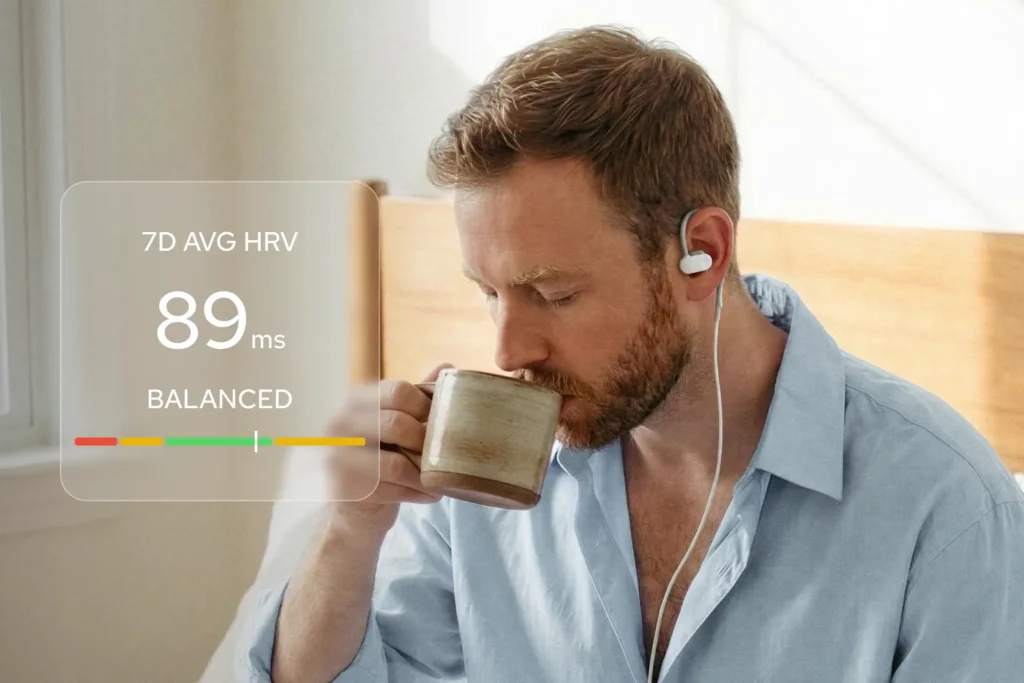
On day nine, my Oura reading came in at 44, well above the 38 it had averaged for two years. I assumed it was a fluke, but day ten came in at 46, day eleven at 43, and day twelve at 47. I started taking screenshots because I didn’t quite trust it.
Tiredness was the third area where I noticed a change.
The mid-afternoon slump I’d been planning my days around got softer. I wasn’t suddenly highly energetic, but the mid-afternoon energy crash is cleaner.
Three of my six areas had improved noticeably, and we weren’t even halfway through.
Day 16–22: Sleep, and the Gut Finally Settling
I lowered my expectations around sleep quality.
I got my seven hours, and on paper everything looked fine, so I’d assumed groggy mornings were just my normal.
I’d been wearing the device for an hour before bed for two weeks. In week three, I started waking up feeling like I’d actually slept.
It wasn’t “I had a great night” energy, just rested and settled, the kind of morning where I didn’t need twenty minutes and a coffee to feel fully alert.
My Oura ring backed it up with deep sleep, resting heart rate down overnight, and HRV climbing while I slept.
Digestive symptoms improved more gradually.
The daily bloating that used to arrive after lunch has dialled down to maybe once or twice a week. I stopped having to plan my mornings around my stomach. I ate a few things I’d quietly been avoiding for a year, without triggering the same digestive discomfort.
By that point, improvements were noticeable across most areas I had been tracking.
That left inflammation, which was more difficult to quantify.
But around day twenty, I noticed my wedding ring was loose again. The morning stiffness I’d been blaming on my mattress, and the slightly puffy feeling in my face and hands, had gradually improved.
I hadn’t been tracking it closely because I wasn’t sure how to. I just noticed I felt less swollen; in a way, I’d stopped expecting to.
Day 23–26: I Went Through a Review of Published Research
By week four, I’d stopped wondering whether this was working and started wondering why one intervention appeared to influence several different symptoms simultaneously.
I gave myself a Saturday afternoon with a coffee and a stack of open browser tabs.
This was the mechanism I came to understand.
The vagus nerve is the body’s main parasympathetic pathway. It’s the longest cranial nerve, running from the brainstem down through the neck and into the heart, lungs, and digestive system. About 80% of its fibres are afferent, meaning they send signals to the brain, and only 20% are efferent, meaning they send signals away from the brain.
This helped explain why multiple symptoms might improve simultaneously.
The vagus nerve plays a role in regulating your heart rhythm, sleep, stress response, digestion, and the body’s inflammatory signalling.
These systems are interconnected through the autonomic nervous system regulation. So when that system has been persistently activated over long periods, it tends to show up as a cluster of issues, not just one.
HRV is widely used as a non-invasive marker of autonomic nervous system function: lower HRV has been linked with poor sleep quality, elevated stress reactivity, slower recovery, and ongoing tiredness, which closely matched many of the symptoms I had been experiencing..
The signal travels up the nerve to the brainstem.
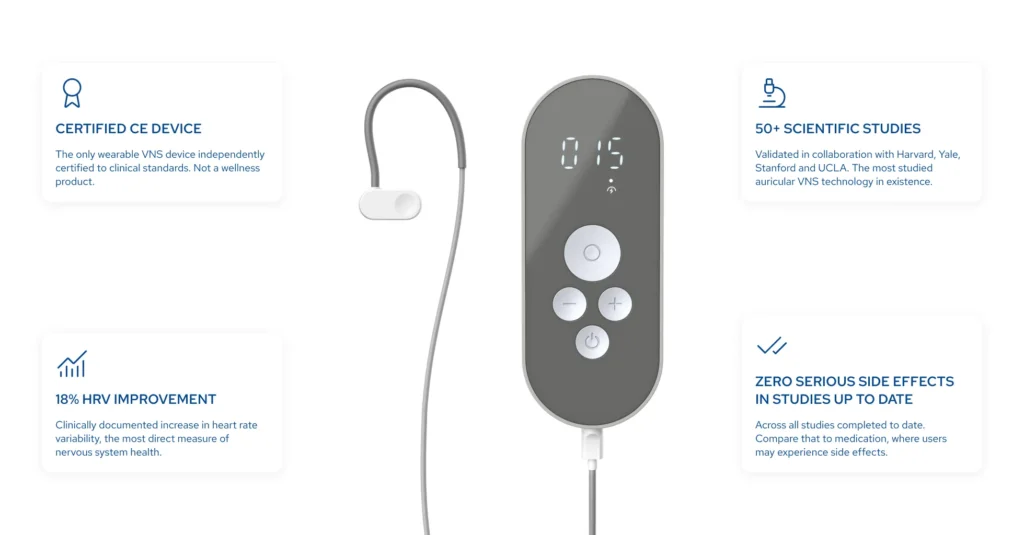
This kind of stimulation has been studied in randomised controlled studies, safety reviews, and scientific analyses. A few numbers from that body of research stood out:
- A 61% increase in vagal activity
- An 18% increase in HRV over a study period
- A 35% reduction in stress-response reactivity
- A 31% improvement in reported sleep quality
- A 78% reduction in inflammatory markers
- A 48% reduction in reported tiredness, alongside improved energy
I won’t pretend I read every paper, but it was enough to convince me that what I was experiencing across all six things wasn’t a placebo or wishful thinking, and that there was a mechanism connecting them.
Day 30: What Changed
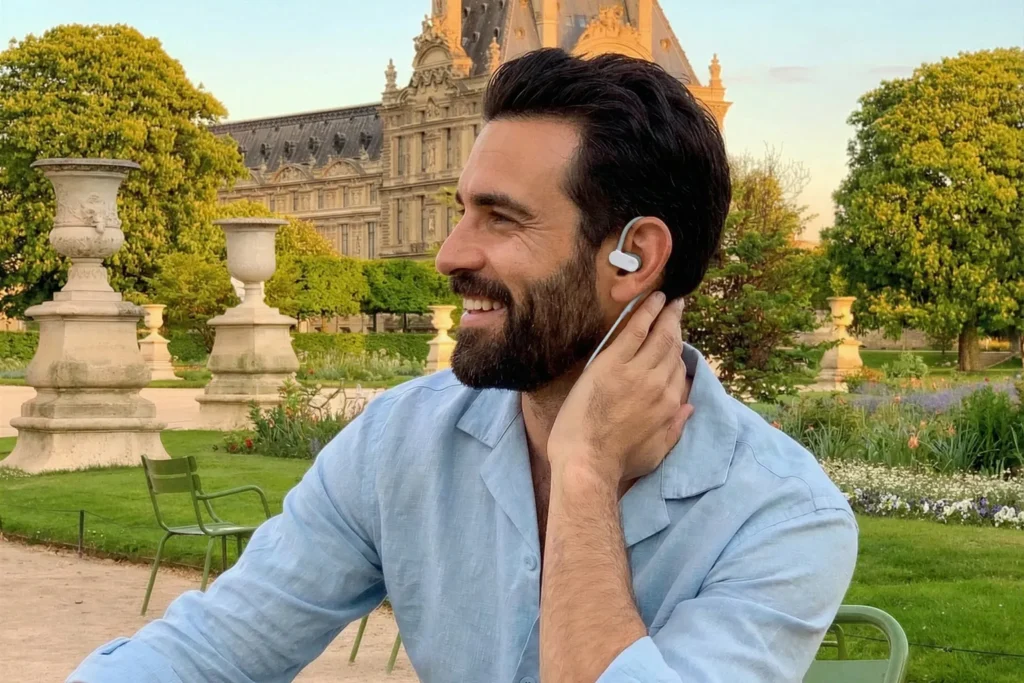
I’m still 45, in the same job, with the same workload and responsibilities. This isn’t magic, and some days still aren’t great.
But here’s where my six things landed after 30 days:
- HRV: It moved from a 38 average to a 46 average, and it's still slowly climbing.
- Sleep: I get roughly the same hours, but I wake up rested now instead of groggy.
- Anxious thoughts: The low background buzz of persistent low-grade nervous system activation has eased a lot, and I can switch off in the evenings.
- Gut: Daily bloating is now occasional, and I've stopped planning my day around my stomach.
- Inflammation: There's less of the puffy, stiff, achy feeling, and my wedding ring fits the way it used to.
- Tiredness: The 3 PM wall is mostly gone, and I reach the evening with more mental and physical energy remaining.
And the one I didn’t even put on the list, my wife told me I’m easier to be around. Less reactive to small things.
I hadn’t noticed it myself, which is usually how that goes.
Why Your Body Stays Stuck (And How This Helps)
The vagus nerve is the longest cranial nerve in the body.
It runs from the brainstem down through the neck and into the abdomen, branching into the heart, lungs, and digestive system. About 80% of its fibres are afferent, meaning they send signals to the brain, and only 20% are efferent, sending signals away from the brain.
When you’ve been running in low-grade stress mode for a long time, which is common in chronically stressful lifestyles, the parasympathetic side can have a harder time doing its job. The sympathetic nervous system takes over, and the physiological recovery becomes less efficient, even when you’re trying to rest.
This is why so many of the things we put up with, like poor sleep, low HRV, a wired feeling, digestive dysregulation, low energy, and a persistent low-grade physical discomfort and stiffness, can all live downstream of the same underlying state.
A persistently elevated sympathetic activation.
It’s also why dealing with them one at a time, with a supplement here and a diet there, so often fails. These symptoms may share overlapping autonomic mechanisms.
Auricular vagus nerve stimulation works by sending mild electrical signals through a branch of the vagus nerve that runs close to the skin in the outer ear. The signal travels up the nerve to the brainstem, which can help support the parasympathetic side of the nervous system.
It’s not a hack, and it’s not a stimulant.
It’s about supporting parasympathetic nervous system activity through external vagal stimulation.
A Note on the Practical Side
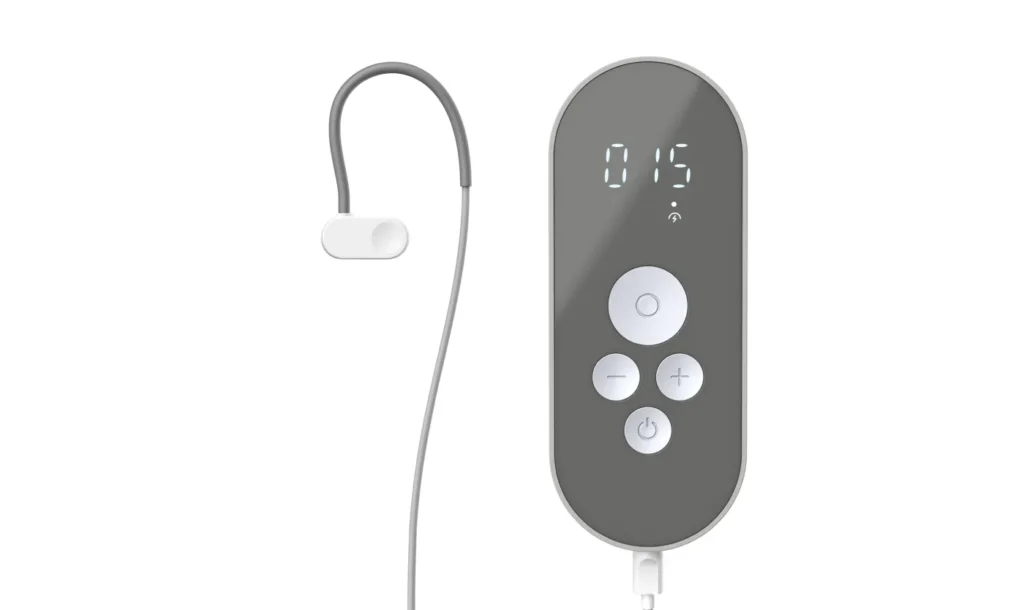
If you’re thinking of trying one, here are a few things I wish someone had told me.
I paid full price, around €700. It’s not cheap. I later found out they run a remote research study you can sign up for. You fill out some forms, share your data, and you get around €70 off.
The other thing that made me commit was the 30-day money-back guarantee.
If it hadn’t worked, I’d have sent it back, and that’s what reduced the perceived financial risk for me in the first place.
You wear it clipped to your ear, and sessions run from 15 minutes up to two hours. I do thirty minutes in the morning while working and an hour in the evening while reading or watching TV. The sensation is a faint tingle, not painful.
You can wear it during the most normal daily activities that aren’t workouts, such as showers.
My Honest Take
I’ve spent a lot of money over the years trying to deal with my problems one at a time. A supplement for energy, an app for sleep, a diet for my gut, a breathing course for stress. Most provided temporary or inconsistent benefits.
Testing one device against six things at once felt like a stretch when I started. I expected it to help with one, maybe two, and disappoint me on the rest.
Instead, it produced noticeable improvements across all six areas I was tracking.
Not all the way, and not overnight, but in the same direction, over the same month.
It hasn’t made me twenty-five again, because that’s not how this works. But it’s given me back my sleep, my mornings, my patience, and a greater sense of physical stability and recovery.
That’s the most honest summary I can give.
Could Your Nervous System Be Keeping You Stuck?
If stress, poor sleep, low HRV, tiredness, or brain fog have started to feel “normal,” it may be worth exploring whether your nervous system is receiving the recovery signals it needs.
Nurosym is one of the most researched non-invasive vagus nerve stimulation devices currently available, designed to support parasympathetic activity and autonomic balance through gentle daily sessions at home.
Learn how Nurosym works and why researchers are studying vagus nerve stimulation for stress resilience, sleep quality, HRV, inflammation, and recovery.
This blog post aims to be informational and should not replace professional health advice. Always consult with a health professional for personalised advice.
References
- Borges, U., Laborde, S., & Raab, M. (2019). Influence of transcutaneous vagus nerve stimulation on cardiac vagal activity: Not different from sham stimulation and no effect of stimulation intensity. PLOS ONE, 14(10), e0223848.
- Cao, R., et al. (2022). Accuracy Assessment of Oura Ring nocturnal Heart Rate and Heart Rate Variability in Comparison With Electrocardiography in Time and Frequency Domains: Comprehensive Analysis in Comparison With Electrocardiography in Time and Frequency Domains: Comprehensive Analysis. Journal of Medical Internet Research, 24(1), e27487.
- Peuker, E. T., & Filler, T. J. (2002). The nerve supply of the human auricle. Clinical Anatomy, 15(1), 35–37.
- Redgrave, J., et al. (2018). Safety and tolerability of transcutaneous vagus nerve stimulation in humans; a systematic review. Brain Stimulation, 11(6), 1225–1238.
- Yap, J. Y. Y., et al. (2020). Critical review of transcutaneous vagus nerve stimulation. Frontiers in Neuroscience, 14, 284.
- NIH. (1996). Heart rate variability: Standards of measurement, physiological interpretation and clinical use. Task Force of the European Society of Cardiology and the North American Society of Pacing and Electrophysiology. Circulation, 93(5), 1043–1065.


 English
  German
  French
  Spanish
  Swedish
  Italian